

International students: M-1 visa assistance available. Learn more below
Australian Students
Your Australian Airline Career Starts in California
Train at Gillespie Field (KSEE) in San Diego, California. Build your FAA credentials, then follow a clear path to convert your licence with CASA and get hired by an Australian airline.
2 Exams
CASA conversion theory for a CPL
12 Months
Zero to airline-ready
60+
Modern aircraft in fleet
M-1 Ready
We handle your I-20
—For Australian international students
Train in the U.S., Fly for an Australian Airline
Australian airlines are always looking for well-trained pilots, from regional turboprop operators to Qantas Group, Virgin Australia, and Rex. To fly for any of them, you will need to hold a CASA Australian flight crew licence.
You train with us in California, earn your FAA ratings in world-class conditions, then follow a clear path to convert to an Australian CASA licence. For many graduates, that conversion is shorter than people expect. We guide you through every step.
Important: You cannot fly commercially in Australia on a standalone FAA licence. A conversion to a CASA licence is required before an Australian airline will review your application.

Training Location
San Diego, CA
KSEE, Gillespie Field
Licence Destination
CASA CPL/ATPL
Civil Aviation Safety Authority
Why Choose Sling Pilot Academy?
Skip outdated fleets and long timelines. We are the most efficient and best equipped full-time program that gets you airline-ready, and the fastest-growing flight school in the U.S.
60+
Modern aircraft
10+
FAA certified simulators
KSEE
San Diego training base
30+ Countries
Represented among our graduates
—The academy experience
The fastest-growing flight school in the U.S.
Our full-time airline career program combines structured training, clear milestones, and dedicated student support to help you progress efficiently from zero experience to professional pilot readiness, all in a supportive campus-style community.

Sling NGT Aircraft
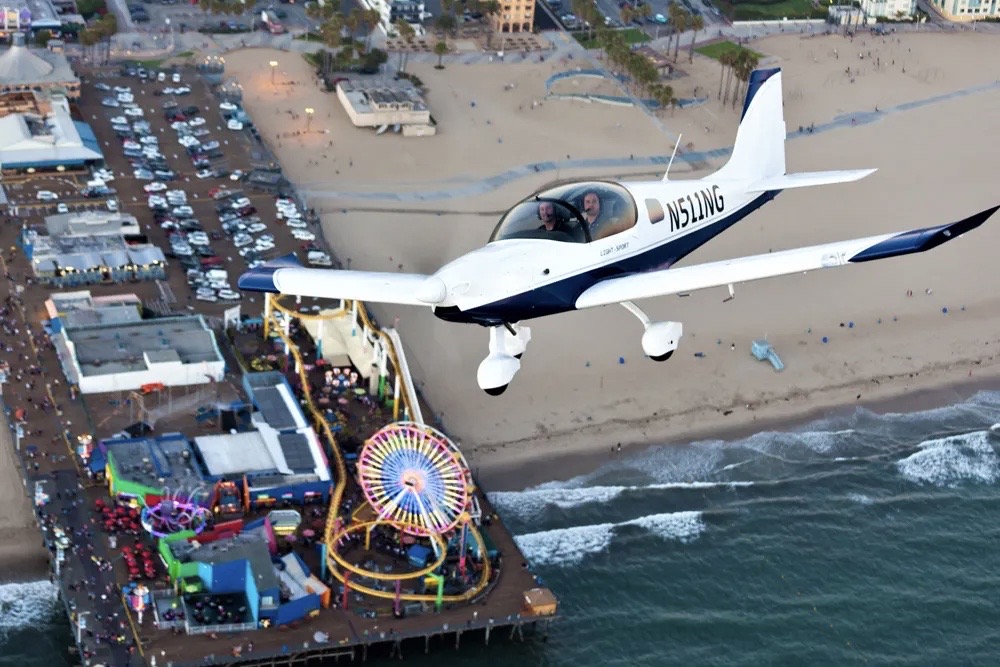
Train in modern glass-cockpit Sling NGT aircraft from day one. 60+ aircraft across Southern California means you’re always flying, never waiting.

Zero to Airline-Ready
Our structured accelerated program takes you from your first flight to ready for ATP hour building in 12 months. Every stage mapped out, no guesswork, no gaps.
Industry-Leading Curriculum
Developed alongside partners including SkyWest. Daily ground school, practical cockpit training, and airline-style procedures from day one.

“Under My Wing” Mentorship
Student Success tracks your progress and keeps you on course, assigning every student a mentor based on their specific needs. You’re never just a number.

Great Flying Location
San Diego gives Sling students over 300 flyable days a year, so full-time training can keep moving. Students are exposed to busy controlled environments, coastal routes, and mountain terrain, all within reach of the academy.

Student Housing Nearby
With accommodation options in the local area just minutes from KSEE, students don’t need to worry about where they’ll stay during training. It’s another way we help guide you through your aviation journey.

—M-1 student visa
How to Train in the U.S. as an Australian Citizen
To train at Sling as an international student you will need an M-1 Student Visa, a non-immigrant visa specifically for vocational training. Flight school qualifies.
Sling Pilot Academy is authorised to issue the I-20 form, the document you present to the U.S. Embassy or Consulate when applying. We handle the paperwork; you focus on flying.
Flight training is not permitted on a visa waiver or ESTA, so plan your M-1 application early. As a foreign student you will also complete a TSA security approval before training begins, and the FAA requires pilots with foreign addresses to designate a U.S. Agent for Service. We can help you navigate each of these.
After Sling: Converting Your FAA Licence to CASA
Once you complete your FAA training, here is the conversion path to an Australian CASA flight crew licence, your ticket to flying commercially for an Australian airline.
Step 01
Apply to CASA and Verify Your FAA Licence
Create your CASA Aviation Reference Number (ARN), then apply to convert your overseas licence through myCASA. CASA verifies your FAA licence directly with the FAA.
- Your licence must be current, valid, and issued by an ICAO state
- CASA notes FAA licences are quicker to verify than most
- Identity and security checks apply, which can take up to 8 weeks
Step 02
CASA Conversion Theory Exams
CASA does not recognise foreign exam credits, so you sit the Australian conversion exams. For most Sling graduates holding an FAA CPL, that is just two subjects.
- CPL: COSA (Australian rules and procedures) and CHUF (human factors)
- Both must be passed within one exam window
- Exams must be sat in Australia, so plan them for your return home
Step 03
Australian Medical and Flight Test
Once your exams are passed, you complete a flight test for your Australian licence and hold a valid CASA medical for the operations you plan to fly.
- Medical issued by a CASA Designated Aviation Medical Examiner (DAME)
- Flight test with a CASA-approved examiner
- Lodge your final application to be issued your CASA licence
Step 04
Get Airline-Ready: ATPL Theory and Hours
Australian airlines typically ask for an Australian CPL or ATPL with all CASA ATPL theory subjects passed, plus a multi-engine instrument rating and a Class 1 medical.
- Sit your CASA ATPL theory subjects while you build hours
- Check your instrument rating and multi-engine currency with CASA
- An ATPL itself requires 1,500 hours and a minimum age of 21
Already started in Australia?
Bring your current training records, and we’ll help map the FAA path.
Some students come to Sling after starting an RPL, PPL, or part of their CPL at home. Admissions can review your licence, ratings, hours, and training records, then outline what may count, what still needs to be completed under FAA rules, and what may later need to be converted for Australia.
Australian Airline Employment Requirements
Once your licence is converted, you must meet the standard entry criteria for Australian airlines. Here is what to prepare for.
What Australian Airlines Look For
Carriers such as Qantas Group (including QantasLink and Jetstar), Virgin Australia, Rex, and Alliance Airlines publish their own entry criteria and hour minimums, and these change with demand. Your Sling training and CASA conversion put you in a strong position to meet them.
Notably, entry-level roles generally require you to already hold the right to work in Australia, such as citizenship, permanent residency, or an equivalent unrestricted right to work.
Right to Work
Citizen, permanent resident, or unrestricted right to work
English Proficiency
ICAO Level 6 certification
Security Clearance
Able to hold an ASIC (Aviation Security ID Card)
Full CASA Licence
Complete conversion and theory before applying
Australian Airline Hiring Checklist
- Australian CASA CPL or ATPL (converted from FAA)
- Passes in all Australian ATPL theory subjects
- CASA Class 1 Medical Certificate (current)
- Multi-engine instrument rating, current for airline operations
- Australian citizenship, permanent residency, or unrestricted right to work
- ICAO Level 6 English Language Proficiency
- ASIC eligibility and background checks
- Multi-crew experience or a multi-crew cooperation course
- Minimum hours per airline’s current requirements
Ready to talk through your route?
Speak with our international admissions team about enrolment, M-1 visa timing, your I-20, and how your current training background fits the pathway.
Frequently Asked Questions
Yes. If you already hold a CASA licence or have completed partial training in Australia, Sling can help you review the FAA route for the ratings you still need. Depending on your background, this may include FAA foreign licence verification, TSA approval, visa and I-20 steps, and any required FAA knowledge or practical tests. If your goal is Australian airline employment, you may later need to bring those FAA privileges back to CASA standards.
No. To work as a pilot in Australia for longer than 12 months, you must convert your FAA licence to an Australian CASA licence. Airlines such as Qantas Group, Virgin Australia, and Rex will only consider applications from pilots holding the appropriate Australian credentials.
You will need an M-1 Student Visa, specifically designed for vocational training including flight school. Sling Pilot Academy is authorised to issue the I-20 form, the official document you present to the U.S. Embassy or Consulate when applying. Flight training cannot be done on a visa waiver or ESTA.
You apply to CASA with your FAA licence, and CASA verifies it with the FAA. For a CPL, you then pass two conversion theory exams (COSA and CHUF) in one exam window, complete a flight test, and are issued your Australian licence. CASA does not recognise foreign exam credits, and exams must be sat in Australia. Total time depends mainly on security clearance, exam dates, and flight test availability, so many pilots start the application process before they finish training.
As a rule, entry-level and direct-entry first officer roles expect you to already hold the right to work in Australia. Airlines such as Jetstar list Australian permanent residency or an unrestricted right to work as a minimum requirement. As an Australian citizen, this is already covered.
While you are unable to work as a CFI in the U.S. using an M-1 visa, you can log all training hours. Some of the biggest advantages of training in the U.S. are California weather, complex airspace, and training volume at Sling, which let you build hours faster and more affordably during the training. All of your logged hours count toward your total experience when Australian airlines review your application.
Yes. To use your Australian licence you must hold a valid CASA medical appropriate for the flying you plan to do, and airlines require a CASA Class 1 medical. These are issued by CASA Designated Aviation Medical Examiners (DAMEs) in Australia, and your FAA medical will not substitute for it. Booking this early in your conversion timeline is a good idea.
From the flight line
A quick look at the aircraft, students, and Southern California flying environment around Sling Pilot Academy.
Swipe or use the arrows to see more videos.